Estes / Renger Skydancer
Collapse
X
-
Estes / Renger Skydancer
Tags: None👍 2 -
A man of many talents! I didn't realize you also flew RC.
One of these days you should fill people in on what you do for a living. I'd bet there are many that would enjoy your products.
-
For a few years my rocketry goals were focused on scale two-stage HPR. Now I'm working on RC gliders. I'm still a learner when it comes to RC flying. Not -quite- a noob, but very much skill-building.
I did do an intro post here a while back, let me see if I can find it.
My name is Charles McGonegal. I'm a BAR. And more... - Ye Olde Rocket Forum
Not much has changed since 2015, except that I lost nation-wide reach during covid, and that i left the petrochem job last summer - on my 30th work anniversary. I am also now the people-facing manager (as opposed to the tree-facing manager) at Brightonwoods Orchard.Comment
-
Heh, I forgot I asked you to do the same thing 11 years ago.
Old age setting in.
I knew you liked two-stage HPR flying. Let me know if you want the link to that scale Nike data that Chris sent me.Comment
-
Fascinating stuff. While I do find the plans with Estes logo and Larry Renger, Project Engineer, I do not recall seeing this model in any catalog, sales material, or the big lists of all Estes kits. Was this a kind of skunk works effort by/with an Estes-employed engineer but not in any way an Estes commercial product? Are there others like this with company ties? I know that some pretty big boost gliders eventually made into Estes catalogs and sales, but I think they tended to be of lighter (often styrofoam) construction than this one. Were any model rocket engine-boost gliders sold/marketed with the RC hardware in place, or was that always a buyer add-on? Thanks.Comment
-
The story is covered in the March 1971 issue of American Aircraft Modeler.Attached FilesJohn
YORF #003
SAM #004👍 1Comment
-
John posted the article - it looks like a demo project for NARAM 12, with the design published.Fascinating stuff. While I do find the plans with Estes logo and Larry Renger, Project Engineer, I do not recall seeing this model in any catalog, sales material, or the big lists of all Estes kits. Was this a kind of skunk works effort by/with an Estes-employed engineer but not in any way an Estes commercial product? Are there others like this with company ties? I know that some pretty big boost gliders eventually made into Estes catalogs and sales, but I think they tended to be of lighter (often styrofoam) construction than this one. Were any model rocket engine-boost gliders sold/marketed with the RC hardware in place, or was that always a buyer add-on? Thanks.
The closest I've seen to BnF (Bind and Fly) is the Estes T-25 Centurian, but that was still ARF - Almost Ready To Fly. You had to add your own radio and servos, but it was more constructed that the StratoBlaster. Both the Stratoblaster and Centurian are heavier than my Skydancer, for all they have foam core wings.
J&H Aerospace and Dynasoar Rocketry kits all have the builder supply radio and servos.
I do have pics, and could post a build thread if anyone is interested.Comment
-
Flight report.
Two flights today on D12-3. First was a level flight down the pad-way, full up elevator couldn't make it climb.
(Photo by Walt Evans)
I mis-diagnosed this (I think) as excess noseweight, removed some and flew again. Another level flight with full up elevator, but this time a wingtip clipped the rail of one of the B pads.
Plans call for the pod to be level with the fuselage, but I suspect it needs a little up cant to overcome being above the Cg.
Comment
-
Hi, Charles !
Check your Wing Incidence Angle and Elevator Pitch ( the rigid portion ) . . . The Pod might be correct, but something else could be misaligned.
Dave
"Failure Is Not An Option . . . Adapt & Overcome ! "Comment
-
That's an interesting thought.
The plan doesn't call out the angles, but I brought the PDF into Illustrator and did some measurements.
The lower surface of the fuselage, wing and pod are all parallel - let's call that 0 degrees.
The empannage appears to be 0.3 degrees from that baseline.
The horizontal stabilizer measures to 0.7 degrees from the baseline.
I measured my as-built Skydancer, and came up with the empannage being 1.0 degrees from fuselage/wing, and the horizontal elevator being 0 degrees from the empannage - or that same 1 degree from the baseline.
But the question brings up a tuning/trimming possibility I hadn't considered. It may be easier to unglue the horizontal stab and change that angle than to change the pod angle. I can try it with my electric motor pod first.
CharlesComment
-
Charles, are those alignment angles positive or negative ( Positive could cause downward pitch and Negative could cause looping ).
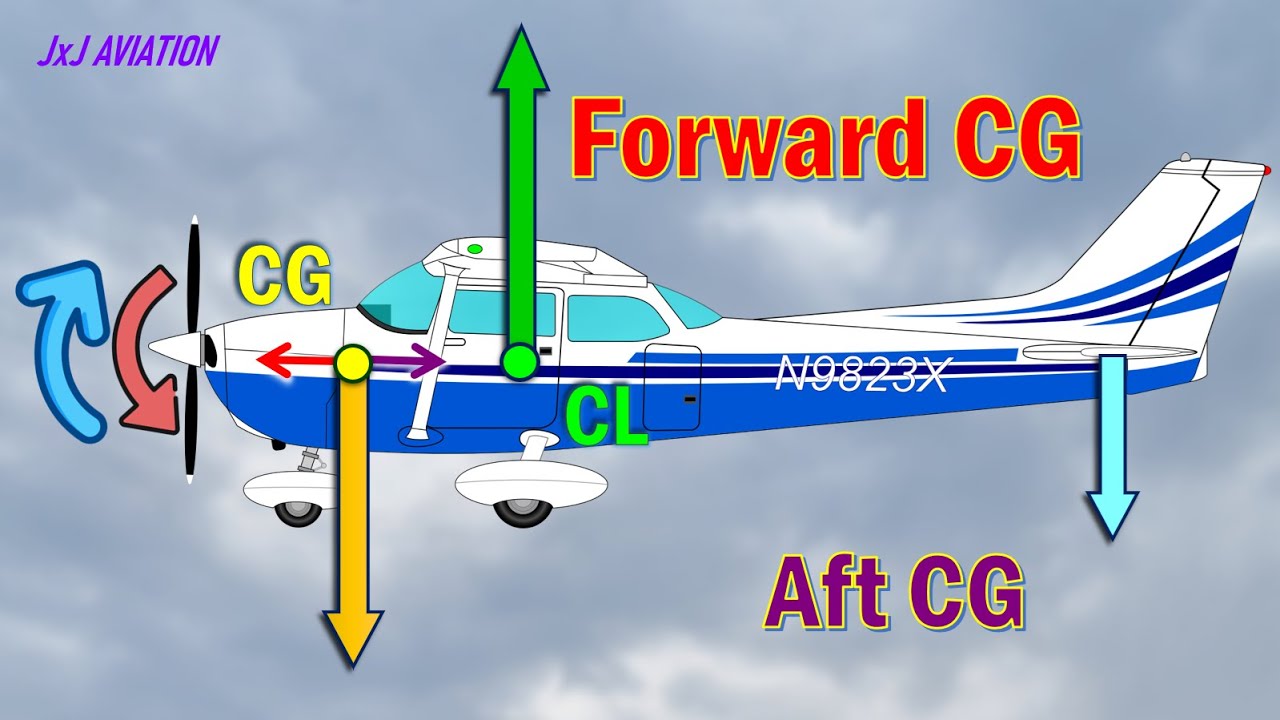
Another "suspect" might be the CG location. It might be fine during glide, yet problematic under power.
( I suspect that the cg might be too far forward, since your problem occurs during Boost, but not during Glide ).
Since the motor is high above the centerline, the effect of a Forward CG would be magnified.
https://www.theampeer.org/cg/cg.html
Boost Glider Vertical Flight Analysis.pdf
YOUTUBE VIDEO :
https://www.rocketryforum.com/thread...ibrary.155758/
ALSO :
Factors Affecting BG Boost Performance - T Barber.pdf
Dave
Last edited by Ez2cDave; 07-21-2026, 10:19 AM."Failure Is Not An Option . . . Adapt & Overcome ! "Comment
-
Negative - in the direction to cause the nose to pitch up.
I put the Cg in the place suggested in Doug Holverson’s build thread over on TRF. It’s not specified in the plan. Also, for the second flight, having the same thought, I removed half of the nose weight- and the boost (or lack there of) was exactly the same. Except for hitting a B pad rail.Comment
-
Charles,Negative - in the direction to cause the nose to pitch up.
I put the Cg in the place suggested in Doug Holverson’s build thread over on TRF. It’s not specified in the plan. Also, for the second flight, having the same thought, I removed half of the nose weight- and the boost (or lack there of) was exactly the same. Except for hitting a B pad rail.
Hmm . . . More research and testing is needed.
Question 1 : Does the problem start immediately, once the model is off the rail ?
Question 2 : Does the problem worsen, as airspeed increases ?
I'm thinking that either the Wing or Stabilizer might be twisting or fluttering, due to high speed airflow, under power.
DaveLast edited by Ez2cDave; 07-21-2026, 01:42 PM."Failure Is Not An Option . . . Adapt & Overcome ! "Comment

Comment