2X Manta Upscale

Collapse
X
 
  • Time
  • Show
Clear All
new posts
  • shockwaveriderz
    rocket dinosaur
    • Mar 2005
    • 1457
    • My Old Kentucky Home

    #16
    Years ago, circa early 2000's I built my 1st ever Manta. I used spruce for the fuselage, and covered it with Orange esaki tissue and minwax polycrylic.

    didnt add a lot of weight.

    I was out one day in my backyard tossing it around for some trimming and it landed on the roof of a next door 2 story apt building.
    I figured eventually it would blow off and i'd recover it then.

    That night we had a pretty good thunderstorm and rhe next morning I found it laying in the grass.

    The tissue/polycrylic had made it waterproof and it still worked fine.

    While I was building it, I thought about adding either elastic or a torsion bar so that I could adjust the elevator like HK did with his Stingray BG.

    I always thought that HK was innovative with his glider and rocket designs.
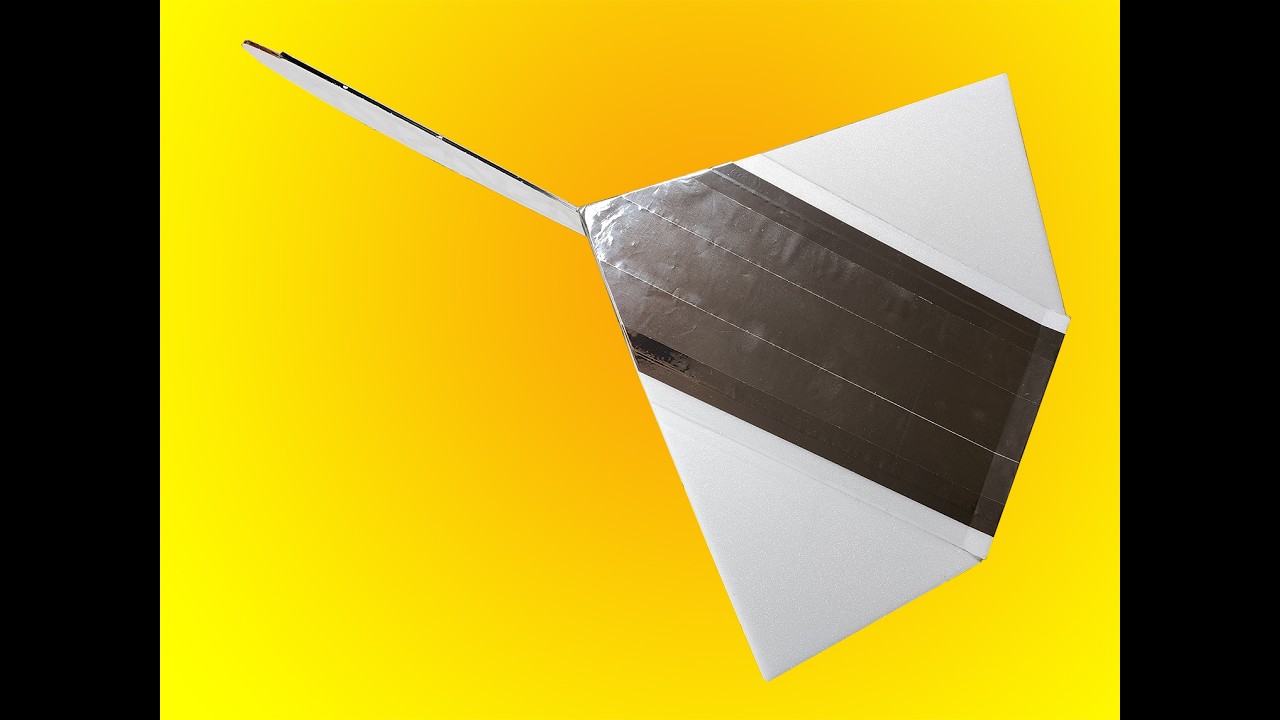
    Last edited by shockwaveriderz; 07-17-2026, 10:17 PM.
    "Old Rocketeer's don't die; they just go OOP".....unless you 3D print them.

    Comment

    • Rktman
      Mad for modrocs
      • May 2019
      • 165
      • Chapel Hill, NC

      #17
      Originally posted by shockwaveriderz
      Years ago, circa early 2000's I built my 1st ever Manta. I used spruce for the fuselage, and covered it with Orange esaki tissue and minwax polycrylic.

      didnt add a lot of weight.

      I was out one day in my backyard tossing it around for some trimming and it landed on the roof of a next door 2 story apt building.
      I figured eventually it would blow off and i'd recover it then.

      That night we had a pretty good thunderstorm and rhe next morning I found it laying in the grass.

      The tissue/polycrylic had made it waterproof and it still worked fine.

      While I was building it, I thought about adding either elastic or a torsion bar so that I could adjust the elevator like HK did with his Stingray BG.

      I always thought that HK was innovative with his glider and rocket designs.

      I really like the idea of keeping the Stingray's elevon flap flat during boost to prevent the possibility of looping. I think I'll add this one to my clone build pile as well, both as an original-sized one and as an upscale once the original is built.
      “I would like to die on Mars. Just not on impact”. — Elon Musk

      “Minds are like parachutes--they only function when open”. —Thomas Dewar

      Comment

      • Rktman
        Mad for modrocs
        • May 2019
        • 165
        • Chapel Hill, NC

        #18
        Been a couple of weeks but I finally got around to resuming work on the build. The motor pod with a spent casing and ‘chute inside was attached. The launch CG is 5 1/8” forward of the glide CG, just about at the forward apex of the wings with a good margin of separation between the two. Having the fulcrum point that far back should reduce the severity of the nose-down torque.

        Click image for larger version  Name:	20260708_082707.jpg Views:	0 Size:	2.96 MB ID:	556247


        Color will be added after its maiden test flight. It will have earned it if it succeeds. It may be awhile since we’ve entered hurricane season and we’re in the middle of a horrendous heat wave.

        I had a small break in the weather this morning between impending storms, so I took the opportunity to final trim the Manta. Honestly, despite an hour spent trying to fine tune it, it still glides just at the edge of stalling, and I couldn’t get any better results than the first trimming session without pushing it over that fine knife edge into nose diving.

        Apologies for the darkness of the video. I was down at the park before the sun was up to beat the oncoming rain, and also to try not to compete with joggers and dog walkers who also use the park.
        ​


        The soaking wet grass softened the paper fuselage covering, and it seems the dried grass bits are now a permanent part of the base of the rudders, since it also softened the glue there enough to bond to it. The paper parts required another coat of waterproofing to strengthen things, so now the glider looks more like a veteran of several flights.

        Weight of this version (including nose weight) tips the scales at 78.5 grams (2.77 oz.) vs the first version at 109.45 grams (3.86 oz.). While that’s only about an ounce, I feel Version II is considerably stronger and shouldn’t rekit itself even if I attempted to send it up again on an Aerotech D21. Fingers crossed, with the weight and strength issues addressed, it’ll finally put in a successful flight going forward.
        Hopefully I can reduce its tendency to arc horizontal (or worse, loop over) during launch by keeping the centerline of the motor’s thrust as low as possible without melting or scorching its foam upper wing surface.
        I’m also attempting to keep the motor’s position as far back as practical to keep the glider’s launch CG as far away from the forward end as possible. By having a shorter moment arm, it should minimize the tendency of the motor to torque the BG’s nose downward, reducing its aforementioned chances of arcing over before the pod ejects or worse, a fatal power 180° into the ground.
        Now it’s a wait for some suitable flying weather to see how things turn out.

        …to be continued.

        ​
        “I would like to die on Mars. Just not on impact”. — Elon Musk

        “Minds are like parachutes--they only function when open”. —Thomas Dewar

        Comment

        Working...